The sea beyond the photograph: tides in Milagres
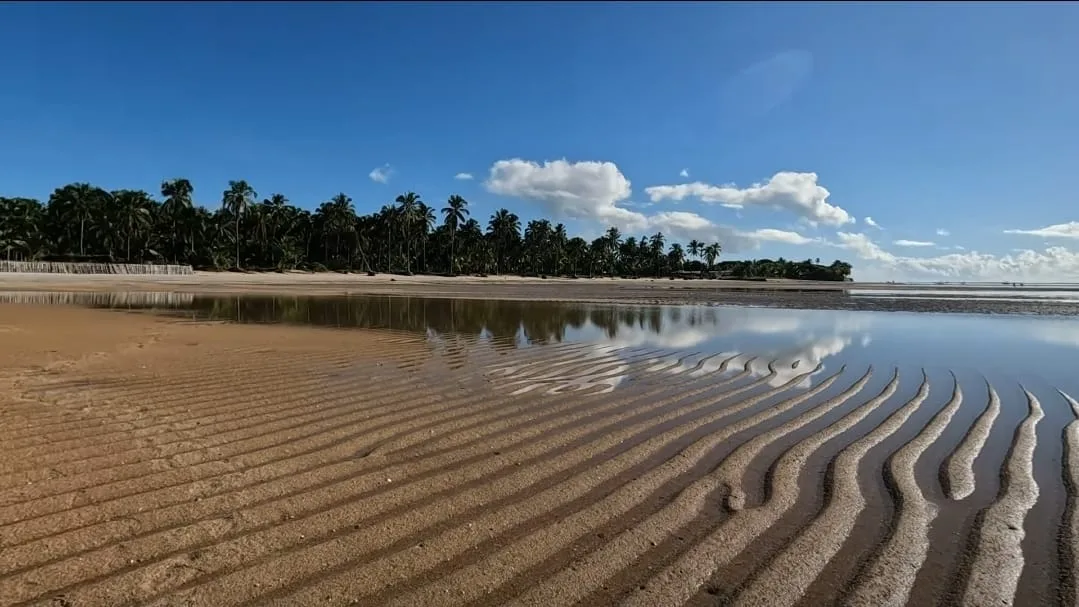
At Tatuamunha, Patacho and Milagres, the tides transform the landscape through the day. It is the same beach, but never exactly the same view.
First we got to know the land. Then we followed the river and its encounters with nature. In this third chapter of our series, it is time to step into the sea.
And here we find one of the most fascinating features of the Ecological Route of Milagres: the sea changes. A lot. At Tatuamunha, Patacho and Milagres, the tides transform the landscape through the day. There are moments when the water pulls back and leaves huge patterns on the sand, and paths and natural pools appear. Hours later, the same beach can be full of water and perfect for a long swim.
It is the same beach. But never exactly the same view.
A sea that changes the landscape
For anyone used to a steadier waterline, the first surprise may be just that: here the sea isn't always in the same place.
Some days we walk many metres across the sand before reaching the water. At other times the sea fills all that space again and completely changes how the beach looks.
The tide doesn't only change the photograph. It also changes what we can do.
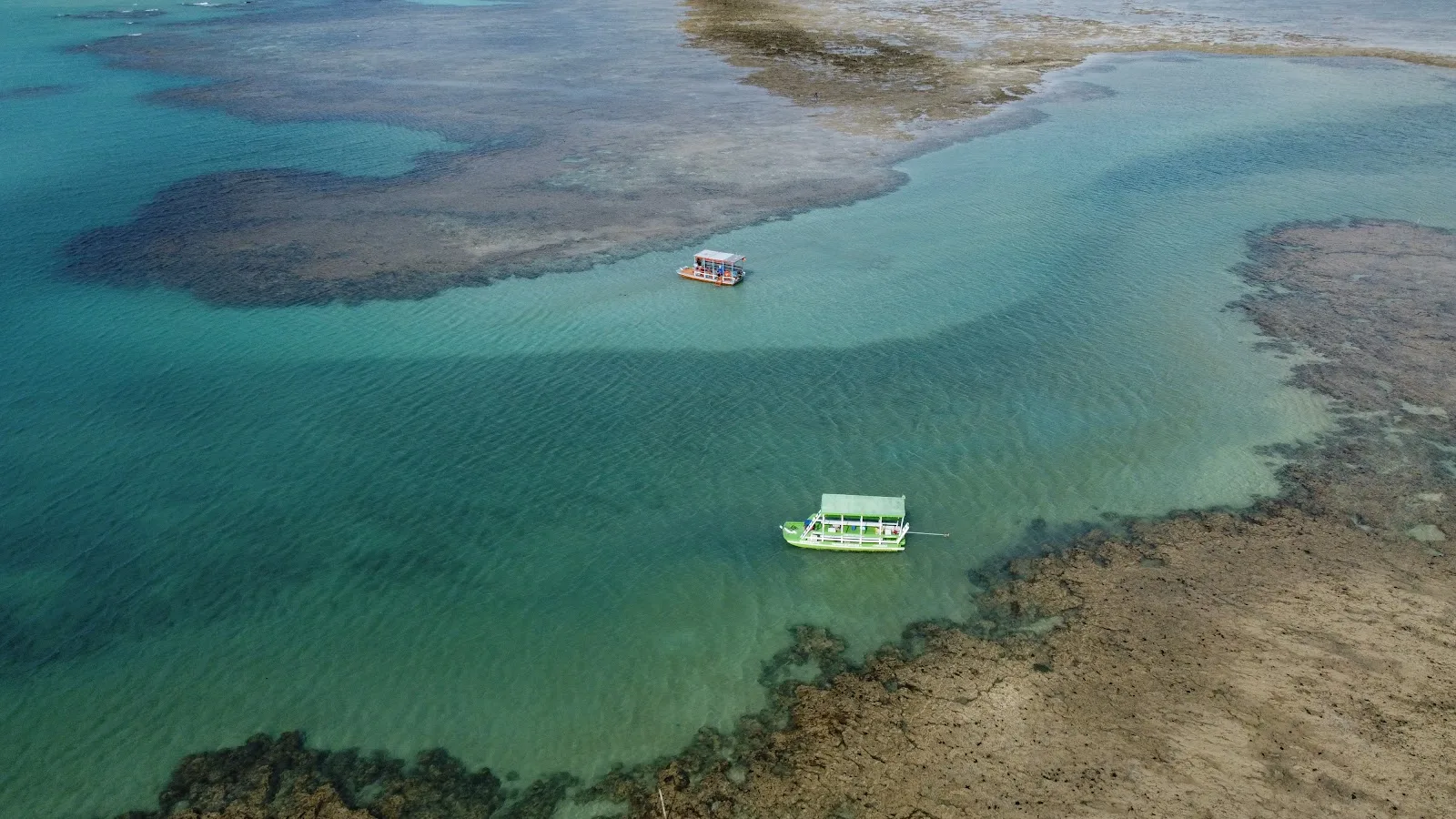
At low tide, sandbanks, natural pools, new paths and stretches perfect for walking appear. Some experiences include guided walks, which let you discover the land the water reveals for a few hours.
When the sea rises again, another moment begins: swimming, staying in the water, paddling or simply enjoying a long bath.
That's why, on the Ecological Route, checking the tide isn't only about planning an outing. It helps answer a much more interesting question:
Which sea do we want to experience today?
The title of this chapter is not an invitation to put the camera away.
Quite the opposite.
The changing tides create an extraordinary landscape for photography: reflections on wet sand, lines of water, reefs, small pools, people walking where a few hours earlier there was sea, and colours that change with the light.
For anyone who enjoys photographing nature and landscape, an early-morning outing or one at low tide can become a real photographic expedition.
But keeping only the image would mean missing part of the experience.
A sea to move in
The sea of the Route doesn't need big waves to offer movement.
On many days the calm waters let families and travellers of different ages find their own way to enjoy them. And for anyone looking for physical activity, the same landscape becomes a huge open-air space.
You can swim.
Paddle a kayak.
Try a water bike.
Walk at low tide.
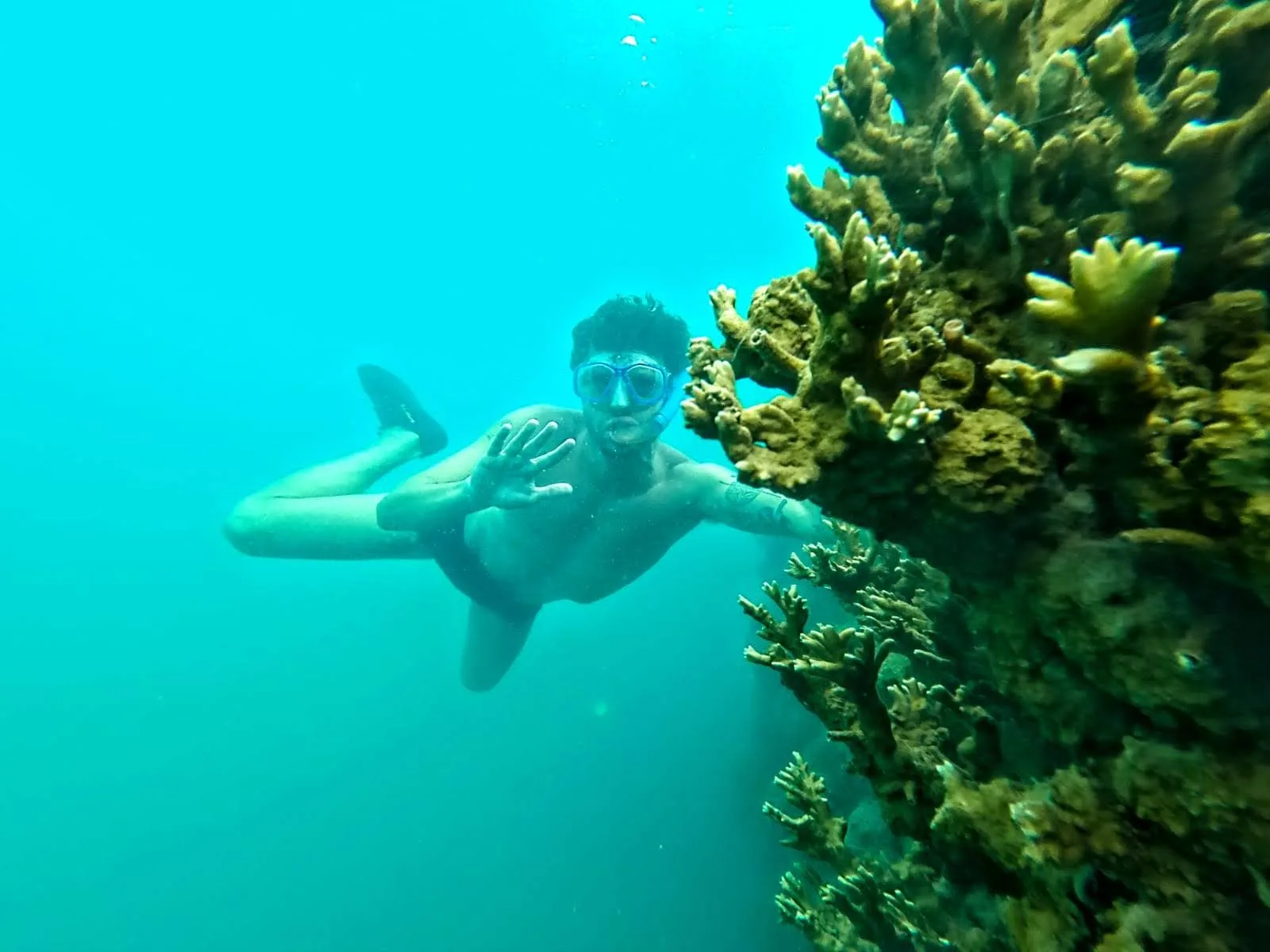
Put on a mask and snorkel.
Join a scuba-diving outing, according to each person's experience and to the conditions and places allowed for the activity.
There are also the trips to the natural pools and, at Tatuamunha, the specific experience of watching the peixe-boi, the West Indian manatee, which is part of another of this land's special relationships with the water.
No single activity represents the sea of Milagres.
The beauty lies in being able to choose.
A small adventure very much of Tatuamunha
And some experiences need no sophisticated equipment and never appear on a “must-do” list.
One of them has already been tried by many Pontal da Enseada guests.
When the tide is going out and the river conditions are right, the water of Tatuamunha moves towards the sea. With local guidance, and always respecting the conditions of the day, you can gently follow that movement: swimming or on a float.
It's simple.
And great fun.
Guests, friends and even my own mother have done it.
Maybe that's why we like this little adventure so much. It didn't come from a tourist list. It came from watching the place, understanding how the water moves and listening to those who know it.
It's the kind of experience that appears when someone can say:
“The tide is good for this today.”
Above and below the water
There is another landscape just a few centimetres below the surface.
A mask and a snorkel can completely change the perspective. For those who want to go further, there are diving experiences with operators and in areas suited to the activity.
On other days nothing more than swimming is needed.
Or floating.
Or walking.
Or letting a natural pool reveal for a few hours what the sea will cover again later.
The same sea can be sport, contemplation, photography, discovery or simply a swim with no time to end.
Every tide offers a different sea
Perhaps that is the most important idea of this third chapter.
On the Ecological Route there is no “the sea” as a fixed image.
There is today's sea.
The morning one.
The afternoon one.
The low-tide sea, which invites you to walk.
The high-tide sea, which invites you to swim.
The one that reveals the pools.
And the one that returns, a few hours later, to cover again the patterns it left on the sand.
It doesn't need to keep the same shape to be beautiful.
Perhaps it is precisely that restlessness that means we never tire of looking at it.
How will the sea be today?
At Pontal da Enseada we help our guests understand this rhythm and choose outings and activities according to the tide, the conditions of the day and the style of each trip.
Our exclusive guide to outings gathers part of that selection: experiences we know, follow closely and recommend in the region.
Because knowing the sea of the Route doesn't just mean knowing where the beach is.
It means learning to ask:
How will the sea be today? Meet the houses and see how to get here.
How will the sea be today? Write to us and we'll help you choose according to the tide.
Check availability See the houses